
Modern Brains, Classic Body: Upgrading Your Restomod with Next-Gen Engines and Advanced ECUs
Modern Brains, Classic Body: Upgrading Your Restomod with Next-Gen Engines and Advanced ECUs
There is something undeniably magnetic about a classic car rolling down the street with a perfectly restored body and a roar that does not quite match the era it came from. That is the promise of the restomod, a vehicle that honors the past while embracing the performance and reliability of modern engineering. For enthusiasts in California, particularly those exploring restomod engine swap options in Santa Rosa, the combination of next-generation powerplants and advanced electronic control units is transforming what is possible inside a vintage shell.
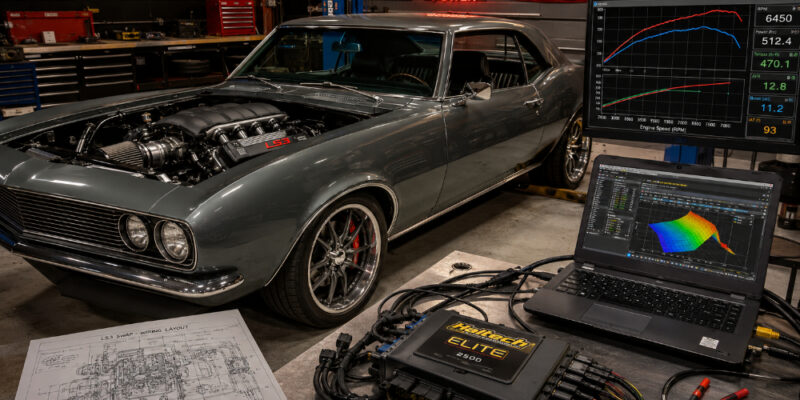
Whether you are dropping a modern LS engine into a 1967 Camaro or fitting a turbocharged four-cylinder into a classic Japanese coupe, the brain behind the build matters just as much as the brawn.
Why the Engine Swap Is Only Half the Story
For decades, the restomod conversation centered almost entirely on which engine to use. Enthusiasts debated cubic inches, compression ratios, and carburetor setups with religious fervor. While those conversations still matter, the modern restomod builder understands that engine selection is only the beginning. Once you have chosen your powerplant, you need a system intelligent enough to manage it.
This is where performance engine management in California has become a true growth industry. The state has long been a hub for automotive innovation, and the shops and tuners operating out of cities like Santa Rosa are pushing boundaries that would have seemed like science fiction to builders in the 1970s. A modern engine dropped into a classic chassis without a proper management system is like installing a supercomputer and leaving out the operating system. The hardware is impressive, but without smart software directing every parameter, you are leaving enormous potential on the table.
A proper standalone ECU installation in Santa Rosa gives your restomod the ability to precisely control fuel delivery, ignition timing, boost pressure, variable valve timing, traction control, and a long list of additional functions. These are not features borrowed from a factory tune. They are fully customizable parameters that a skilled tuner can adjust to suit your specific combination of engine, transmission, headers, camshaft, and driving style. The result is a car that feels factory-fresh in its responsiveness but performs at a level no factory ever intended.
Choosing the Right Engine for Your Restomod Build
Before you ever think about an ECU, you need to commit to an engine philosophy. The most popular choices in the restomod world today fall into a few categories, and each comes with its own management considerations.
The GM LS and LT family of engines continues to dominate restomod builds for good reason. They are lightweight, compact, affordable in the used market, and supported by an enormous ecosystem of aftermarket parts. For a restomod engine swap in Santa Rosa or anywhere else in Northern California, these engines offer a relatively straightforward path to enormous power with excellent reliability.
Ford’s Coyote 5.0 and the newer Predator-based engines have carved out a passionate following among builders who want modern fuel injection, a high-revving character, and strong top-end power. These engines respond exceptionally well to custom aftermarket ECU tuning, and their modular architecture makes them adaptable to a wide range of classic Ford and non-Ford applications.
For those chasing a different character entirely, modern turbocharged inline-four and inline-six engines from manufacturers like BMW, Toyota, and Honda have found their way into builds that prioritize balance and handling alongside power. A turbocharged 2JZ or a BMW S58 tucked into a lightweight classic coupe creates a restomod that is more sports car than muscle car, and the engine management demands are correspondingly sophisticated.
The Role of a Standalone ECU in a Restomod
Once you have chosen your engine, the standalone ECU becomes the centerpiece of your electrical architecture. Unlike the factory ECU that comes with a donor vehicle, a standalone unit is designed to be programmed from scratch or from a base map, giving you complete authority over how the engine behaves.
The leading names in custom aftermarket ECU tuning include companies like Emtron, Link ECU, MoTeC, Holley EFI or Haltech. Each platform has its strengths. Holley’s Dominator and HP EFI systems are particularly popular in the LS swap community because of their deep integration with GM engine data and their user-friendly tuning interface. Emtron systems are favored in high-end builds where data logging and precision matter most. Link ECU has built a reputation for versatility and strong technical support, making their units a favorite among shops handling a wide range of restomod engine swap projects.
A proper standalone ECU installation in Santa Rosa begins long before the laptop is connected. Wiring harness design, sensor placement, grounding strategy, and power supply quality all affect how well the ECU performs. An ECU is only as good as the data it receives, so sensor accuracy and signal integrity are critical. Shops that specialize in performance engine management in California understand that the wiring stage of an ECU installation is where builds succeed or fail. Cutting corners here leads to misfires, sensor dropouts, and tuning headaches that can take months to diagnose.
Custom Tuning: Where Science Meets Art
With the hardware installed and the wiring sorted, the real magic begins on the dyno. Custom aftermarket ECU tuning is a blend of data analysis and intuition that only comes with experience. A skilled tuner in Santa Rosa will start with a conservative base map and methodically work through ignition timing, fuel trims, idle control, and transient response until the engine performs exactly as intended.
For turbocharged or supercharged builds, boost control strategy becomes a central focus. Modern ECUs allow for gear-based boost curves, meaning the engine can deliver less boost in lower gears to protect traction and the drivetrain, then open up fully in higher gears where the power can be used safely. Wastegate duty cycle, boost target tables, and closed-loop boost control are all parameters that a competent tuner will dial in carefully.
Naturally aspirated builds benefit from custom tuning in subtler but equally important ways. Precise ignition advance curves tailored to the fuel octane you plan to use, along with fuel maps that account for your specific injector size and fuel pressure, make the difference between an engine that feels sluggish and unresponsive and one that delivers crisp, immediate throttle response at every RPM.
For restomods in California, emissions compliance adds another layer of complexity. California’s Bureau of Automotive Repair and CARB regulations affect what modifications are street-legal, and working with a tuner who understands the local regulatory landscape is essential. Some builders pursue a dedicated track vehicle build to sidestep these concerns, while others work within CARB-approved parts and calibrations to keep their restomod street-legal year-round.
Conclusion
The restomod has always been about respecting the past without being limited by it. Today, that philosophy extends deep into the engine bay and into the software that manages every combustion event. For builders in Santa Rosa and across California, the combination of a thoughtfully chosen engine and a properly installed and tuned standalone ECU represents the highest expression of what a restomod can be. It is not just a classic car with a new engine. It is a purpose-built machine that drives better than anything its original designers could have imagined, wrapped in a body that still turns heads for all the right reasons.
Book your next tune-up with FLI today and experience the difference of premium-quality service!